Practical Guide to Retail Floor Maintenance for High-Traffic Wood Floors
@retailfloormaintenancefinder
Keeping wood floors in a retail environment presentable is a constant battle. I have spent years working alongside shop managers and facilities teams, and the one thing they all agree on is that a tired floor makes a space feel neglected, even if the shelves are perfectly stocked. In a store like John Lewis, where the wood floors are part of the brand identity, the standard has to be high. The difference between a maintained floor and one that has been let go is not subtle. It shows in the light, in the way customers move through the space, and in the long-term cost of repairs.
Retail floor maintenance is not the same as looking after a domestic hallway. The demands are different. You have foot traffic from opening to closing, delivery trolleys, cleaning carts, and the occasional spill from a coffee shop or plant display. The wear is concentrated along customer routes and near entrances. The key is to plan for that wear rather than react to it after the damage is done.
Understanding the Floor Construction Before You Start
Before you choose a cleaning routine or a protective coating, you need to know what you are working with. Many retail spaces in London feature parquet flooring or solid wood board laid in patterns that were designed to last decades. A solid wood board can be sanded and refinished multiple times, which gives you more options than an engineered product. But the finish on top determines how often you need to intervene.
If the floor has been sealed with a scratch-resistant sealer, that changes the approach. Those coatings are harder and less porous, so they resist marking but can be more brittle. A heavy trolley wheel running over a grit particle can leave a scratch that is actually in the sealer, not the wood. In that case, spot repair with a floor scratch repair kit and a careful recoat might be better than a full sand. If the floor has been oiled with something like Osmo Polyx-Oil or German wood floor oils, the maintenance is more about topping up the oil in wear zones and less about stripping and recoating entire sections.
I have seen stores where the maintenance team was using a general-purpose cleaner on an oiled floor, and within a year the surface looked patchy and dull. That is avoidable if you match the product to the finish. A Bona hardwood cleaner designed for the specific coating type will remove dirt without stripping the protective layer.
The Role of Regular Cleaning and Protection
The most effective retail floor maintenance starts with a dust-free service. In London, where dust from the street is constantly being tracked in, a daily dust mop or vacuum with a soft brush head is not optional. It is the single thing that prevents gritty particles from embedding into the finish and causing micro-scratches. Over a week, those tiny scratches accumulate into a grey haze that makes the floor look worn out before it actually is.
For the wet cleaning cycle, you want a floor buffing machine with a pad that is appropriate for the finish. Many teams use a rotary machine with a red or white pad, but the speed and pressure matter. Too aggressive and you burn the finish. Too slow and you are just spreading dirt around. A good practice is to test the machine on a small area behind a fixture before running it across the whole sales floor.
Site furniture protection is another area where I see a lot of avoidable damage. Chair legs, display plinths, and the base of shelving units should have felt pads or glides that are checked and replaced regularly. A single metal leg dragging across the floor for one day can leave a groove that requires a full wood floor sanding to remove.
When to Use Floor Polish and When to Avoid It
Floor polish has its place, but it is not a universal solution. In a retail setting, a coat of floor polish can restore a subtle sheen and fill very fine scratches, making the floor look fresher for a few weeks. But polish builds up. If you apply too many layers without stripping, the surface becomes cloudy and tacky, attracting more dirt. I would only recommend polish on floors that have a compatible finish, and only after a thorough clean and rinse. Products like Mathewsons floor finisher are designed for this, but you still need to follow the manufacturer's instructions for dwell time and buffing.
For stores that run a seasonal refresh, a light buff and a coat of polish before the Christmas shopping period can make a big difference to the appearance. But for everyday high-traffic floor care, a good neutral cleaner and a regular buffing schedule is more sustainable than relying on polish to mask problems.
Commercial Floor Maintenance Planning
A proper commercial floor maintenance plan should be written down and shared with every team member who touches the floor. That includes the night cleaners, the visual merchandisers moving displays, and the maintenance contractors. I have been called in to London floor restoration projects where the store manager did not know what product had been used last, because the cleaning team had changed brands without telling anyone. That kind of mismatch causes adhesion failures and blotchy patches.
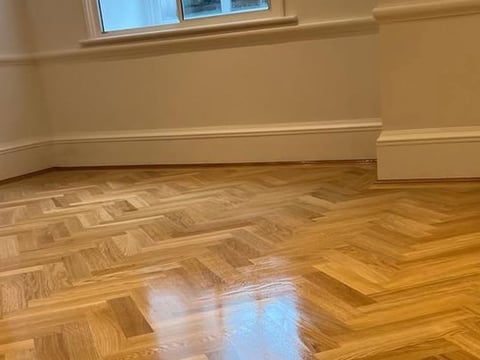
Here is a rough framework that works for most retail spaces:
- Daily: Dust mop or vacuum with soft brush. Spot clean spills immediately with a damp cloth and mild cleaner.
- Weekly: Damp mop with a pH-neutral cleaner like Bona hardwood cleaner. Use a microfiber flat mop, not a saturated string mop.
- Monthly: Machine buff with a floor buffing machine using a beige or white pad, depending on the finish. Check for worn areas near entrances.
- Quarterly: Inspect for scratches, dents, and loose boards. Perform floor scratch repair on isolated damage before it spreads.
- Annually or biannually: Full recoat or re-oil of high-traffic zones. Consider a scratch-resistant sealer in the most exposed areas.
This schedule assumes the floor is in good condition to start with. If you are taking over a floor that has been neglected for years, you will need a more intensive restoration first, including wood floor sanding to remove old coatings and surface damage.
Dealing with Common Retail Floor Problems
One question I get a lot is about water damage near entrances. In wet weather, customers bring in rainwater, and if the floor is not sealed properly at the edges, moisture can wick into the parquet flooring and cause the wood to swell. The fix is not just drying the surface. You need to check the sealant around the door frame and consider a matting system that absorbs moisture before it reaches the wood. A simple rubber-backed mat that is changed weekly will extend the life of the finish significantly.
Another issue is scratch patterns from shopping trolleys and pallet jacks. Even with scratch-resistant sealer, the constant rolling of wheels over the same line will eventually wear a groove. The best solution I have seen is to rotate the traffic lanes periodically by moving the display layout. This spreads the wear more evenly and gives the finish a chance to recover in the less-used areas. If a groove does develop, a localised floor scratch repair with a matching stain and a topcoat can blend it in without sanding the whole room.
For stores that use eco-friendly floor coatings, the maintenance is slightly different. These products often have lower solvent content and may cure more slowly. You need to allow longer drying times between cleaning and reopening the area. But they are worth the extra care because they keep the indoor air quality better for staff and customers, and they align with the sustainability goals that many retailers now publish.
Specialist Help and Guarantees
There comes a point where in-house maintenance is not enough. If the floor has deep scratches, worn-through finish, or sections that have lost their colour, you need a professional London floor restoration company. They will have the equipment for a full commercial sanding, the experience with finishes like Osmo Polyx-Oil and German wood floor oils, and the ability to match the existing colour across a large area. A good contractor will also offer a floor restoration guarantee, which gives you confidence that the work will last.
I always recommend asking potential contractors whether they provide a London dust-free service. Retail spaces cannot afford to close for days while dust settles. A professional operation will use shrouded sanders and extraction units that keep the dust to a minimum, so the store can stay open or reopen much sooner.
Retail floor maintenance is not glamorous, but it is one of those things that customers notice in a positive way when it is done well and in a negative way when it is not. A clean, well-maintained wood floor signals that the business cares about detail. For a department store like John Lewis, that impression is part of the shopping experience. For a smaller independent retailer, it can be the difference between a customer walking in and walking straight back out.
The investment in the right products, the right schedule, and the right specialist support pays off in fewer repairs, longer intervals between refinishing, and a floor that still looks good when you are ready to sell the business or rebrand. That is the real goal of any thoughtful maintenance strategy.